

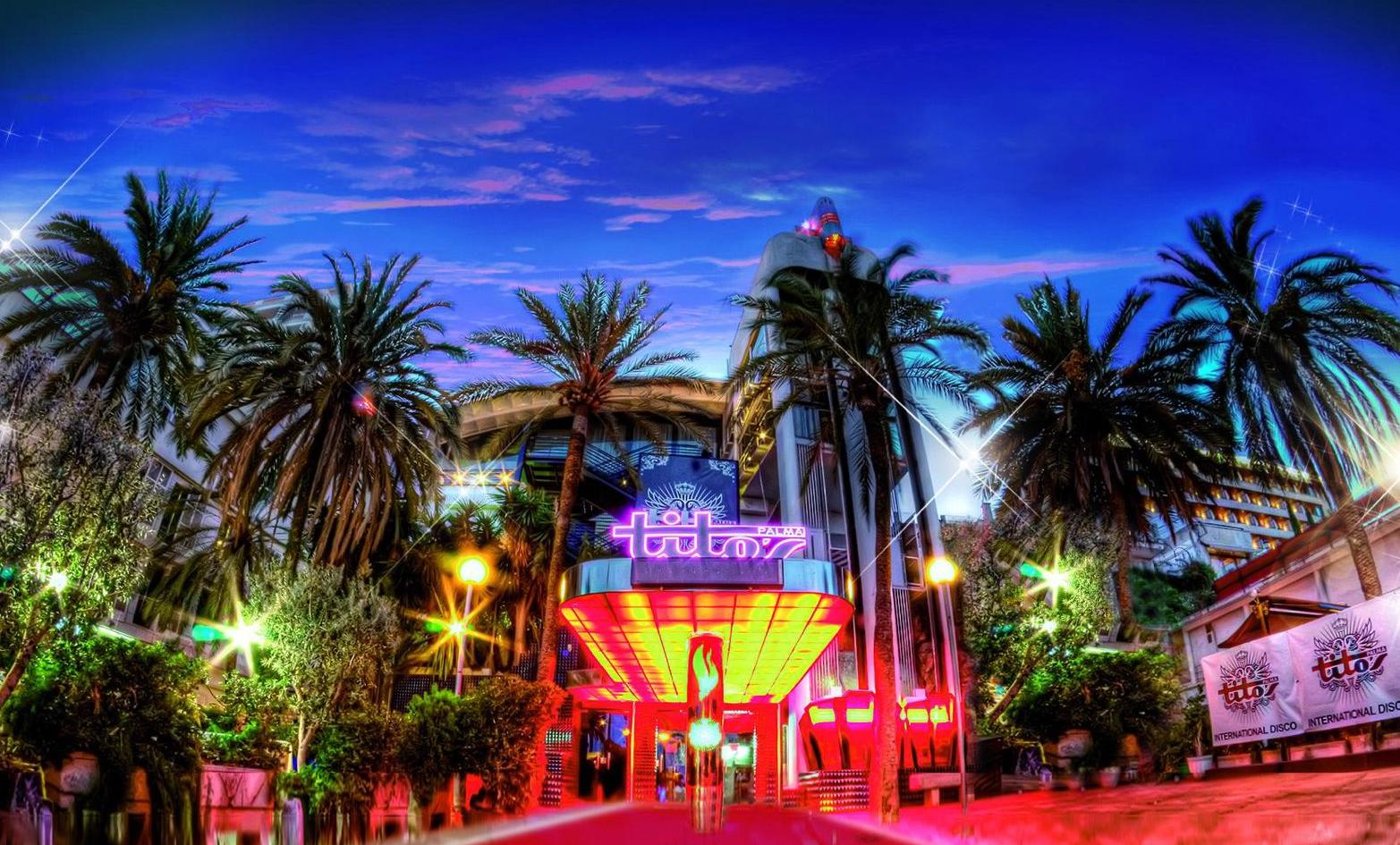
There are places that help define a city.
Not because of a particular building or the name displayed on its façade, but because of everything that has happened around them. Places where different generations have strolled, celebrated, dined or simply gazed out at the sea while Palma continued to grow around them.
The Paseo Marítimo is one of those places.
For decades, it has been one of the city's great social landmarks. A place where the harbour, architecture, gastronomy, yachting and nightlife coexisted naturally, making Palma Bay one of the Mediterranean's most recognisable urban landscapes.
After several years shaped by extensive redevelopment works and the transformation of some of its most iconic spaces, the Paseo Marítimo now appears to be entering a new chapter.
The arrival of Fitz at the historic Tito's building is one of the most visible symbols of this change. Yet the story extends far beyond the opening of a new venue. It reflects a city rediscovering its connection with the waterfront.
More than a seafront avenue
The Paseo Marítimo has never been just a road running alongside the bay.
It has always been a natural extension of the city itself. A place where residents and visitors have shared terraces, restaurants, yacht clubs, hotels, sunset walks and some of the venues that helped shape Palma's recent history.
Few Mediterranean cities enjoy such a direct relationship between their urban centre and the sea. For decades, this close connection between the harbour, architecture and everyday life has defined the character of this part of the city.
The redevelopment of the Paseo Marítimo represents far more than an urban renewal project. It is an opportunity to strengthen the historic bond between Palma and its bay, placing greater emphasis on pedestrians, the landscape and public gathering spaces.
Tito's: a building that forms part of Palma's collective memory
If there is one building capable of encapsulating much of that history, it is undoubtedly the former Tito's.
For decades, it was one of Mallorca's most iconic nightlife destinations and a meeting place for residents, international visitors, artists and countless personalities who spent time on the island.
Beyond its legendary reputation, Tito's represents something even more meaningful: the ability of certain buildings to become part of a city's collective meory.
Its silhouette overlooking the bay remains instantly recognisable, even to those who never stepped inside.
Some places retain their significance, even when what happens within them changes.
A building that continues to evolve
Like cities themselves, buildings also evolve.
Following the closure of Tito's, the property entered a new phase, welcoming different concepts that reinterpreted the space from fresh perspectives. At MallorcaSite, we had the opportunity to document this evolution through both our magazine and blog, following these changes with an editorial approach focused on the city and its Mediterranean lifestyle.
Now, with the arrival of Fitz, the building begins another chapter.
More than simply a change of name, it reflects the continuity of a place that continues to adapt to new ways of experiencing Palma's social life without losing the symbolic value it has accumulated over nearly a century.
A new chapter for Palma's waterfront
The transformation of the former Tito's comes at a particularly significant moment for the Paseo Marítimo.
In recent years, new restaurants and social venues have emerged along the waterfront, while other landmark projects have embarked on major renovations.
One of the most representative examples is the new Club de Mar Mallorca, whose transformation we recently explored in MallorcaSite Magazine. More than a marina redevelopment, it represents a new way of reconnecting the city with its waterfront while enhancing the overall urban quality of the area.
Alongside it, new projects centred on gastronomy and the Mediterranean lifestyle are gradually bringing renewed energy and vitality back to one of Palma's most iconic districts.
It is not about a single opening.
It is the combination of many initiatives that together seem to signal the beginning of a new era for the Paseo Marítimo.
A city rediscovering the sea
Comparisons between Palma and other Mediterranean destinations are inevitable.
Yet perhaps its greatest strength lies precisely in not trying to resemble any of them.
The city has never needed to compete to offer the liveliest nightlife or the most spectacular attractions. Its identity has always been rooted in a different way of experiencing the Mediterranean: more relaxed, more urban and deeply connected to the sea.
Today, as the Paseo Marítimo regains its prominence and symbolic landmarks such as the former Tito's begin a new chapter, Palma appears to be reconnecting with an essential part of its identity.
The story is not simply that a new venue is opening.
The real story is that the waterfront is gradually reclaiming its role as one of the city's great meeting places.
And when a city reconnects with the sea, it also reconnects with a part of itself.
C. Illes Balears, 14 – Son Bugadelles
07180 – Santa Ponsa, Mallorca
T.
(+34) 971 712 165
info@mallorcasite.com · mallorcasite.com

Establiment inscrit en el Registre Oficial d'Agents Immobiliaris de le Illes Balears
NÚMERO
DE REGISTRE: GOIBE724048/2024
Members of: